
The Hand Behind the Heartbeat
- Herbert Berkley
- 11 minutes ago
- 3 min read

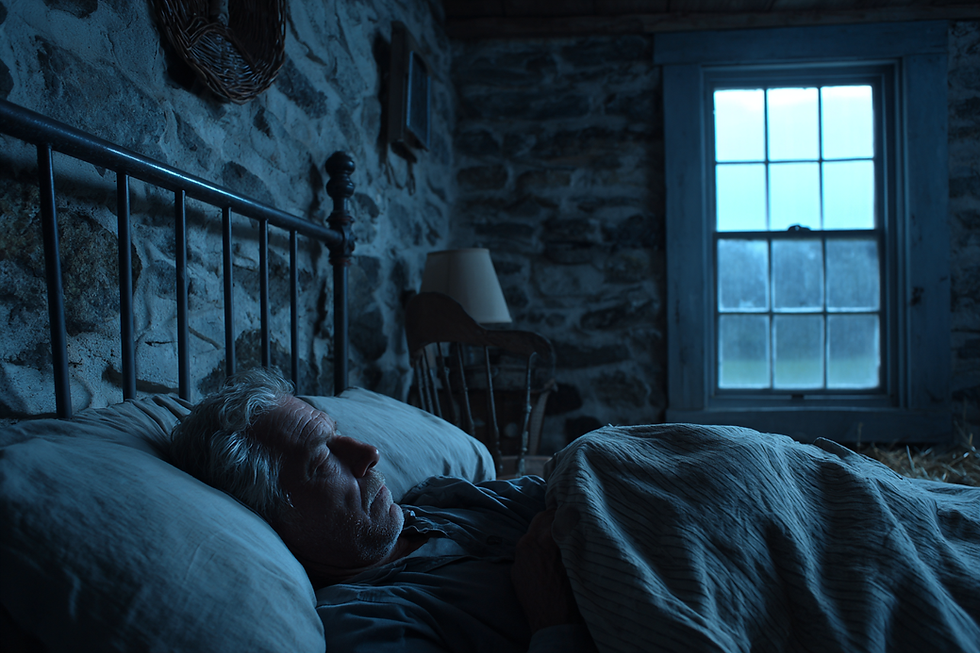
Past midnight, house quiet, one ear against the pillow. There it is again. The heart, keeping its steady work in the dark. Most nights we never notice. Some nights it is the loudest thing in the room.
The textbook can tell us what it is. A muscle about the size of a fist, an electrical node firing a hundred thousand times a day without asking us. Sodium, potassium, pressure, valves. None of that is wrong. As far as it goes.
But the textbook stops at dust.
Scripture starts in the same place. There is no embarrassment in Genesis about what we are made of:
“then the LORD God formed the man of dust from the ground and breathed into his nostrils the breath of life, and the man became a living creature.” (Genesis 2:7, ESV)
Dust from the ground. The Bible said it long before any laboratory did. The text is not nervous about carbon and water and minerals, so we do not need to be either.
Then comes the second clause, and the second clause is everything. And breathed into his nostrils the breath of life. Every instrument in the world can read the dust. Not one of them has ever located the breath. Why does a pump grieve at a graveside? Why does it lie awake wondering whether any of this means anything? The dust explains the rhythm. It has never once explained the longing.
Some nights, we should say, the longing does not feel like evidence of anything. It just feels like being awake.
We are told we are accidents of chemistry, briefly organized, headed for entropy. That is the first clause read as if there were no second. And the account never lies about the dust, which is what gives it its power. It just stops there, and calls the stopping point the whole story.
Paul knew there was a second clause:
“For God, who said, ‘Let light shine out of darkness,’ has shone in our hearts to give the light of the knowledge of the glory of God in the face of Jesus Christ. But we have this treasure in jars of clay, to show that the surpassing power belongs to God and not to us.” (2 Corinthians 4:6–7, ESV)
Jars of clay. Paul concedes the dust without a fight. Fragile, finite, all of it. What interests him is what the clay is holding: light, glory, the knowledge of God shining out of a human face. And not just any face. The face of Jesus Christ, who took on our dust deliberately and carried it all the way to a borrowed tomb. What rose on the third day was done with dying. The frailty stayed in the grave. On the evening of that first day, He stood among His frightened friends, “and he breathed on them and said to them, ‘Receive the Holy Spirit’” (John 20:22, ESV). The breath of Eden, given again. By hands that carry scars.
So the heart keeps its count in the dark, and now we know what we are hearing. Not a machine winding down. A jar, holding treasure. The beat is dust doing what dust was formed to do, and the forming was never dust's idea.
There is a hand behind the heartbeat. It shaped us from the ground once, and it was pierced for us later. It has not let go of the rhythm yet.


